A Farm Season
You’ve all seen most of these photos if you’ve been following us. If you’re new, thanks for checking us out. I thought I’d go through our photo album from the 2023 season and give you all some chronological insight into what the farm season looks like and I’m tired just reliving it. Or maybe because it’s 2am and I can’t sleep but anyway let’s see what we did.

First thing to do is have a look at the mess you left yourself from the past season and say, this season I’m not going to leave myself a mess everywhere all the time constantly.

Next thing you do is clean up and get organized.

We spread 2 wheel barrows per 40 feet of compost on every bed.

Here is Sammy running the wheel hoe down the walk way to cut out any perennial weeds and loosen the soil, we’ll go through with a shovel and redefine each bed to improve drainage and return organic matter to the growing space.

Tarp that puppy and move on to the next plot. We’ll stay ahead of the weeds this season mhmm.

In the tunnel where I have mowed and weed whacked tight any of the remaining plant material that attempted to grow into winter.

Looks like I used the tiller to loosen any remaining plant material to be raked up. Sammy is going through the walk way to loosen it up for reshaping.

Peas are one of the first seeds to be put into the garden. Here we are in our caterpillar tunnel on February 23 doing our first sowing. For best germination, soak your pea seeds for 4-12 hours before sowing and keep the soil moist.

Using the direct seeder we sow lettuce, spinach, arugula, spicy mix, and radishes.

Hand watering to help improve germination.

Covered with agri-bon row cover which protects plant down to about 28 degrees.

Getting all of the plots prepared and tarped early in the season makes for a quick and easy time of filling the farm up. I love this time of year where it’s just clean up and work hard prepping for the season before the harvest becomes all consuming.

As soon as March arrives seeds are already germinating in the propagation house. With even watering and a double cover of agribon and plastic inside the greenhouse we are able to get a head start on seeding for transplants even without a heated space.
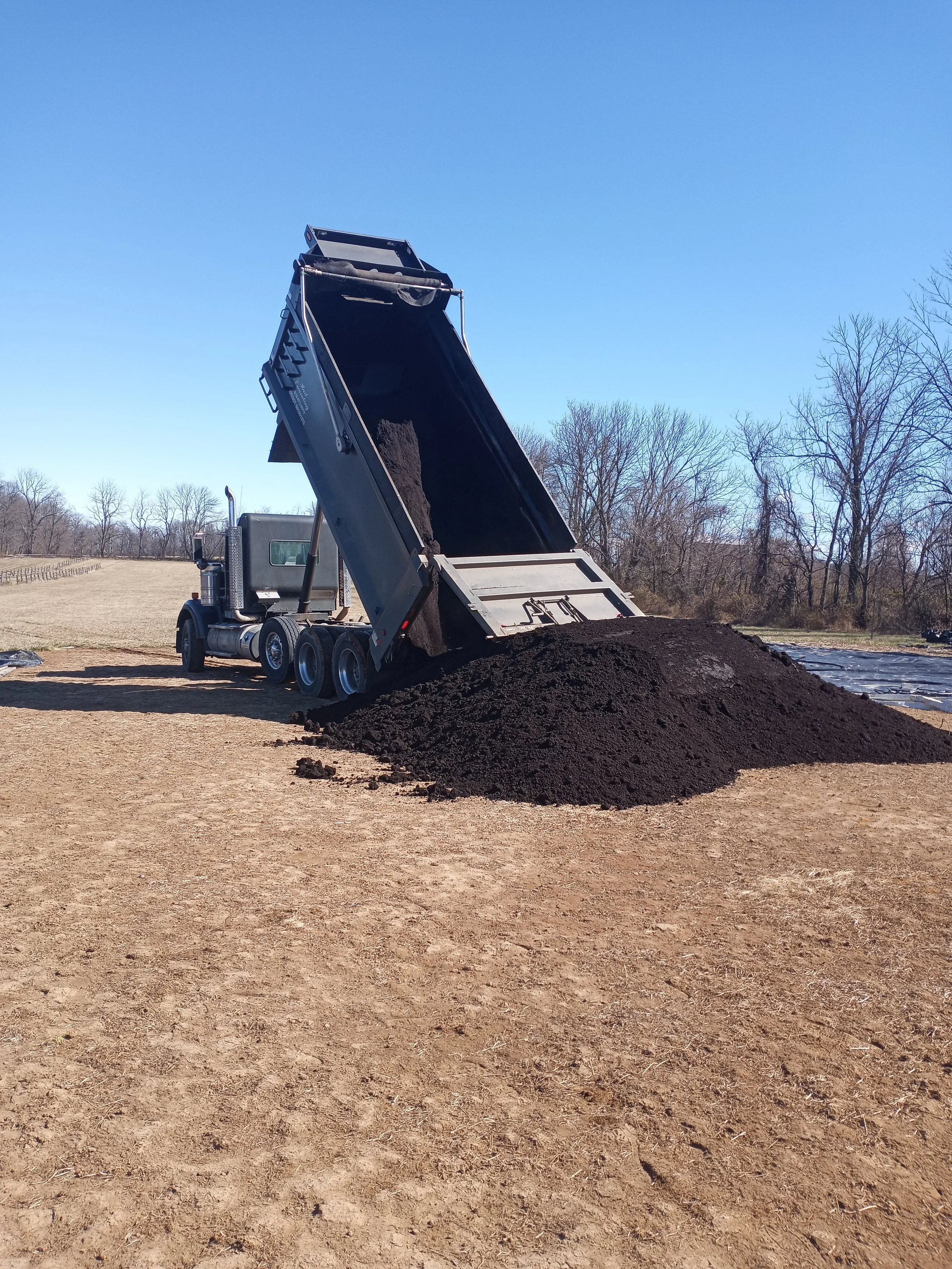
2 dump truck of the season. 60 cubic yards total.

Second dump truck on new plot, third for the season bringing us to 90 cubic yards.

Spring onion sets go in. Beds are prepared next to them awaiting scallions, yellow onions, and red of florence onions.

In the background is where the onions and garlic were and were covered to protect from the pest allium leaf miner. In the foreground is where we planted potatoes and sweet potatoes.

We gotta document for you guys but also it is an easy way to have notes of when we are doing things. We just refer to the photo album to see when we did this or how far along was that at this time etc.

Mid March

Direct sowing the first outdoor group March 17

Sammy is rolling the beds for good seed to soil contact and to firm up the freshly raked and loosened beds.

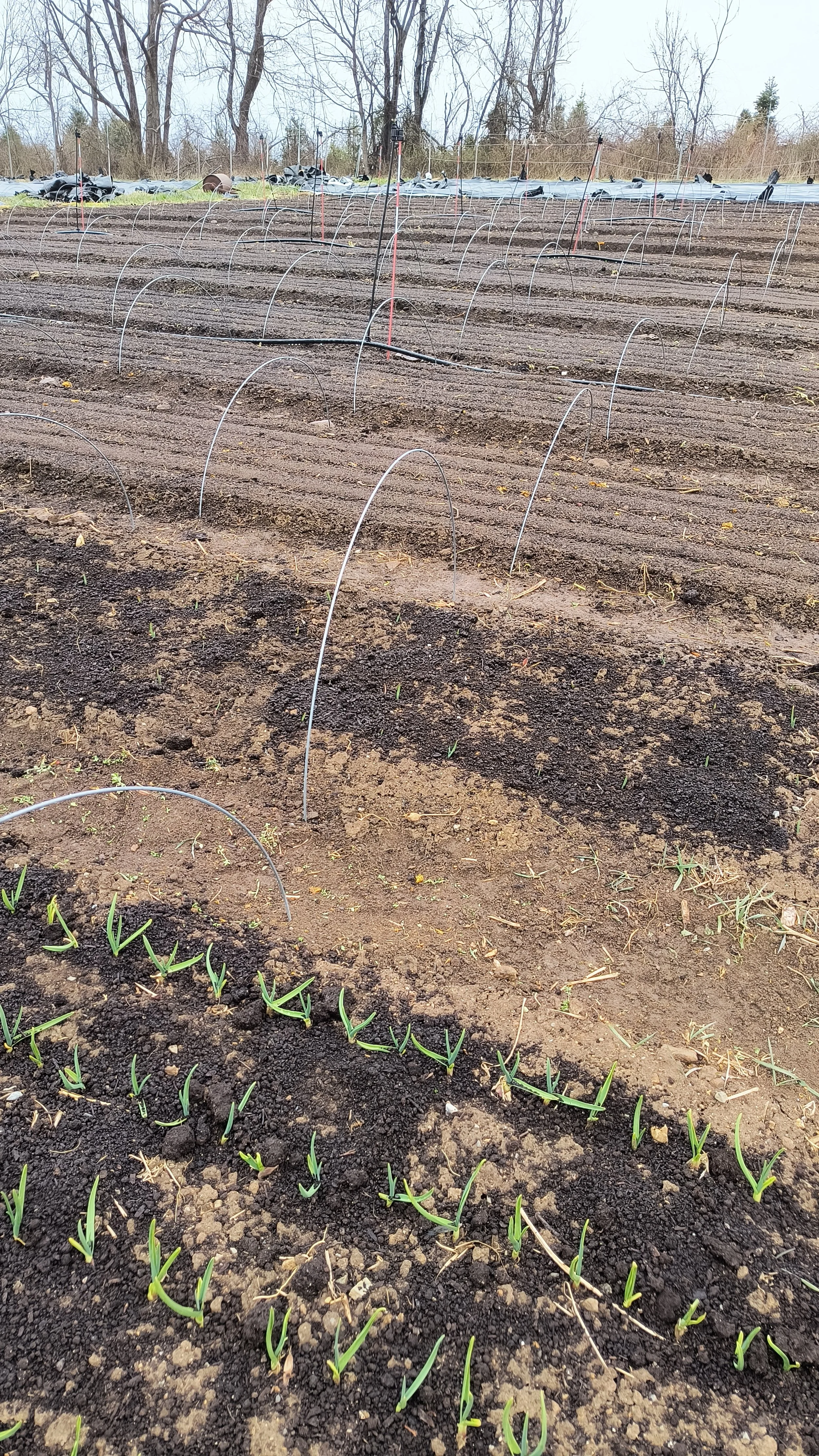
In the foreground is garlic sprouting in a top dressing of compost planted in November 2022. Beyond we hoop the beds and water them in with wobbling sprinklers before covering the plot.

First weeding of tunnels. The spring weeds are so much less vigorous than summer weeds.

Nice to have the time to get those hard to reach places…

The covering is on.

Scored a greenhouse. A project hopefully to be completed this winter for spring growing.

At this time this greenhouse just needs end walls and we can plastic er up.

Sow more seeds. Cilantro here gets multi sown, like many other herbs and some onions, this allows us to plant, grow, and harvest a bunch through the whole process.

Once the next group germinates we move out the first to be hardened off. They will still get covered outside, but no longer babied under multiple layers. Just protection on cold nights and from bugs.

These covers aren’t just held down with our good intentions. We have a lot of these bags around some full of rocks picked from the gardens, most with sand, all filled by hand and moved too many times.

Oh yeah, a better deer fence was in order.

Seven and a half feet high and it has been working great. I love that it never got caught in the mower the 3 times I mowed the farm this season..

Yep, they moved outside.

By April 7th the tunnels are almost ready for harvest.

Weeding the spring garlic.

Look at the good little farmers weeding the gardens.

Fancy

Yes we will grow more potatoes for you.

Sowing up the first beans April 16. Dark seeds are better for germinating in cools soils. Keep them protected from bean beetles and sow them every 2 weeks until August for continuous harvest.

Ready for harvest. Peas have about a month and some trellising from photo to harvest.

April 17 and plants are going in.

I think it was the earliest I’ve ever put on the shade cloth. But I’m probably just usually late. Also April 17

To be a no spray farm is to be a mo’ cover farm.
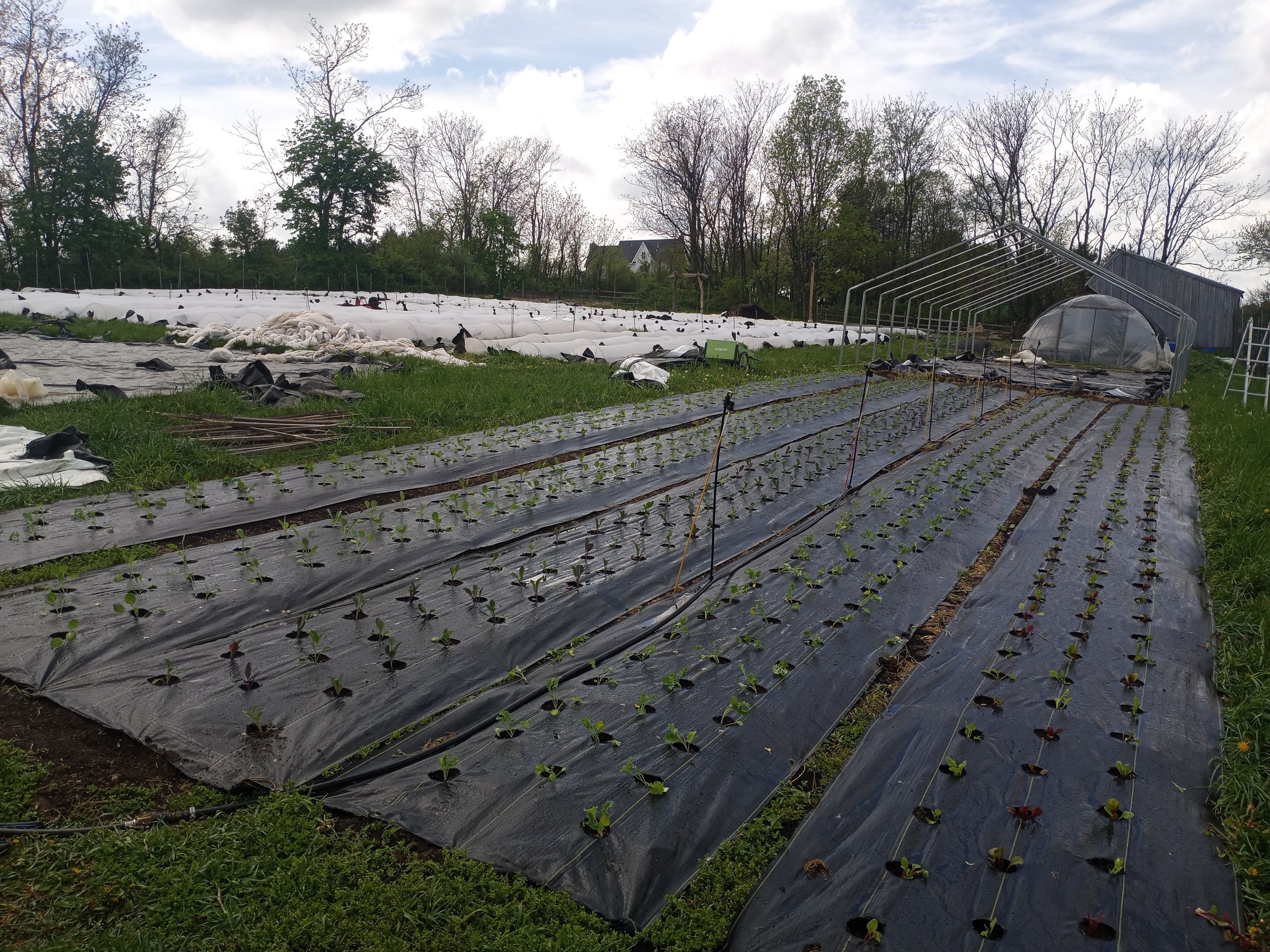
A rarely seen view from the bottom of the hill. Behind us are 200 more feet of the plot.

Weed while you can friend.

Sammy is carefully placing beets for planting to make for easy cultivating.

Back to market. Always so exciting to see everyone and catch up.

We added 30 more 100 foot beds this year. Hopefully if all goes well we can stock pile compost this fall/winter. Many of you may recall the ground never froze enough for us to get the dump trucks back to the property until winter was almost up. This led to a major hustle getting this plot together in our busy spring season just in time for planting summer crops. This season we have no fence to install and no plots to make. Just spread compost and get after it.

I promise we are trying to grow enough lettuce.

Mid May and we had shade cloth out on brassicas and lettuce heads.

No greens harvesters here. All hand picked spinach. I wish our current spinach looked like this but things are just never as lush as the sun is lower in the sky.

The broccolini is naked so we can harvest it. Gotta be quick so we can cover it back up before the cabbage white butterflies come find it.

Maybe our potatoes are so good because I top dress them with compost before I hand hill them with a rake.

Getting those new beds shaped after spreading all that compost. 3 dump trucks by wheel barrow in case you all lost count. Can’t wait to get a fresh pile.

Some of our favorite crops. And some of the most time consuming to harvest. This is the busiest time of year with peas and broccolini needing checked every other day. We even find that cauliflower and broccoli can quickly go from perfect to diseased/moldy in a matter of a day so we walk those patches every other day too.

To terminate beds I use a push mower with a bagger set high. Then I might drop the mower deck down or weed whack it but anyway I always weed whack it down tight as I can to the bed. Then I run over it again with the mower with the bagger and that does a pretty good job at leaving you with this here stubble. Ready to be tilled raked or preferably broadforked and combed through by hand depending on how much time is available. The broadfork is my new favorite method as I find that the intact plant material is easier to clean up and it does a much better job at loosening deep perennial roots which hands find a lot better than a rake does.

Oh sweet clean farm. I miss you, but we will return you to your tidy glory I promise.

When your tomatoes are too tall because you had to prepare 30 new 100 food beds to plant them, the trick is to have your trellis line already set up, so you can just plant them and finish trellising them as you go.

Ha, you think that is tall grass…. psh.

Harvest the cabbage, cover it up.

Thanks for cheering me up little dude. You’re right little gray tree frog, if I mowed the grass more you might not be hanging around with us.

This was right about the time where I started dropping the ball. But I learned a lot about juggling this year.

If you’re a gardener do yourself a favor and grow some broccolini. But keep it covered.

Trying to get 2 or 3 crops out of each bed all season is tough especially come the heat of harvest season.

Worth the effort. We thought we would never grow cauliflower but with good fertility and protection we been doing it.

During the heat of harvest season we might have 20 crops each possibly with multiple varieties. Like these rainbow beet bunches with 3 different varieties of beets.

Farmers are out here in all the conditions with the goal of providing your family healthy local nutrition.
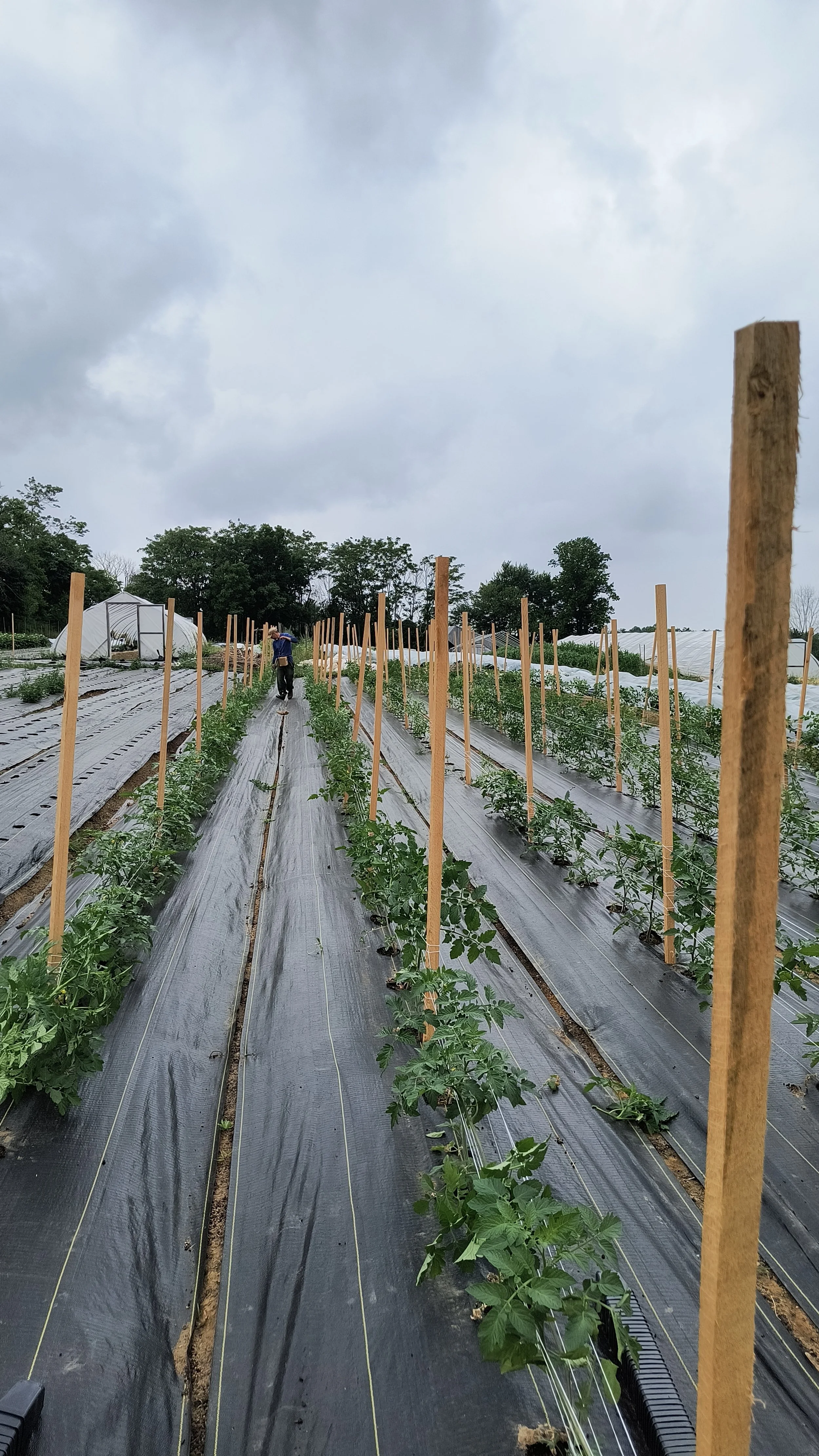
Trellising is done once sometimes twice a week on tomatoes and peas too. Next season we plan to also trellis peppers, eggplant, and beans to keep the heavy fruits from bending branches to the ground where fruits go bad with soil contact (these shouldn’t need weekly trellising though).

My official apology for losing I think 3 groups of carrots to weeds.

But hey, we had potatoes.

The calm before the storm.

Another apology for not keeping up with the baby squash.

Early harvests in the fog. Fore ground is beans covered and not covered, must have stopped harvesting them to snap a picture of Sammy with something heavy on her head.

Why wouldn’t the corolla be a farm vehicle?

Harvest the cabbage. Cover it up. Second group.

Trying to grow enough baby carrots I promise.

When it’s both pea and bean season you’re in the thick of it.
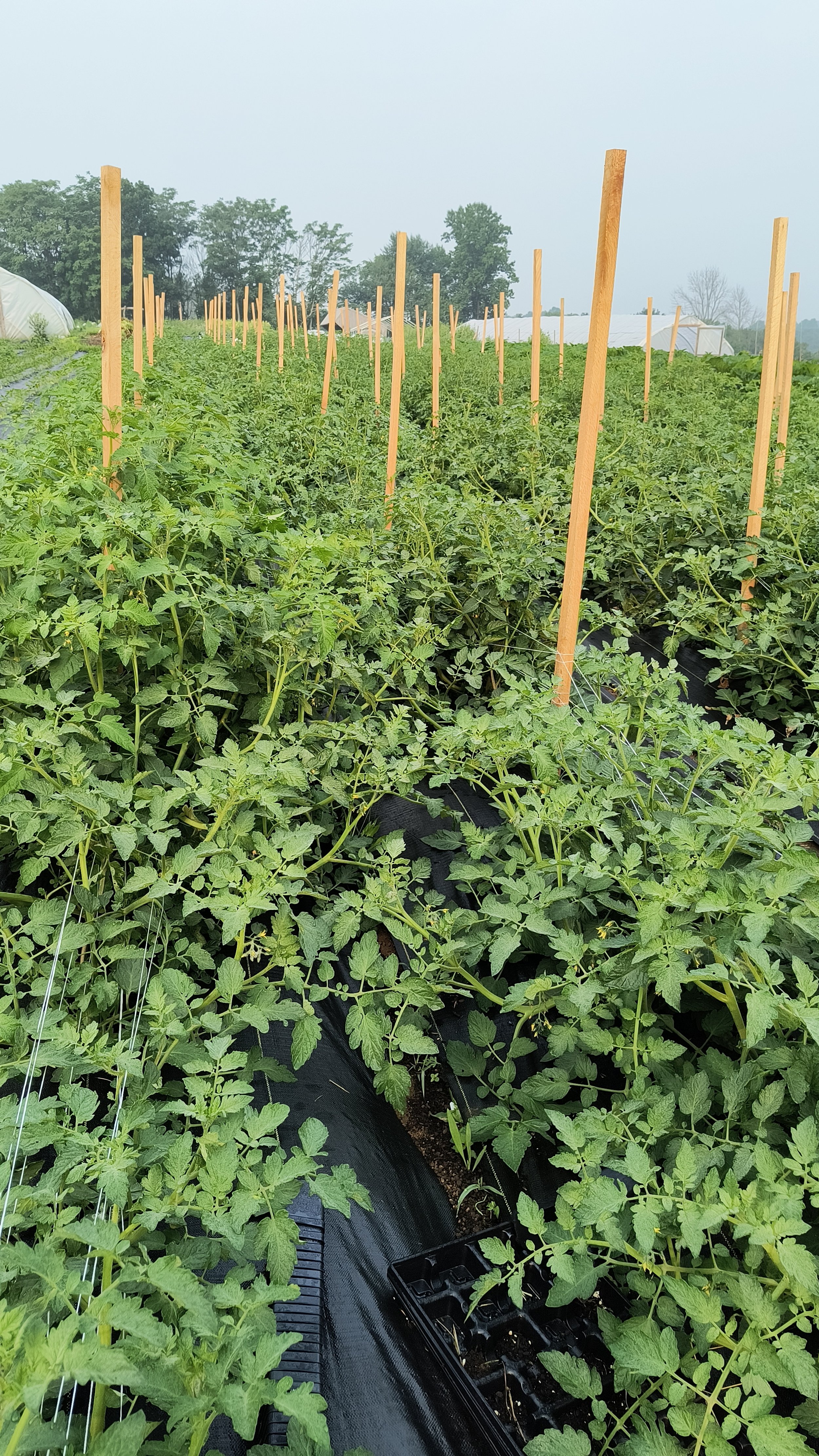
And you can’t forget to trellis.

Not a baby squash but still good.

That’ll hold em for awhile.

Yes we did so have cucumbers. Just not for long. Definitely a crop that needs a second and third succession if you aren’t spraying fungicides like we don’t.

Trying to keep up with the demand for lettuce is a job itself.

What a beautiful way to start the day. Go get ‘em Sammy.
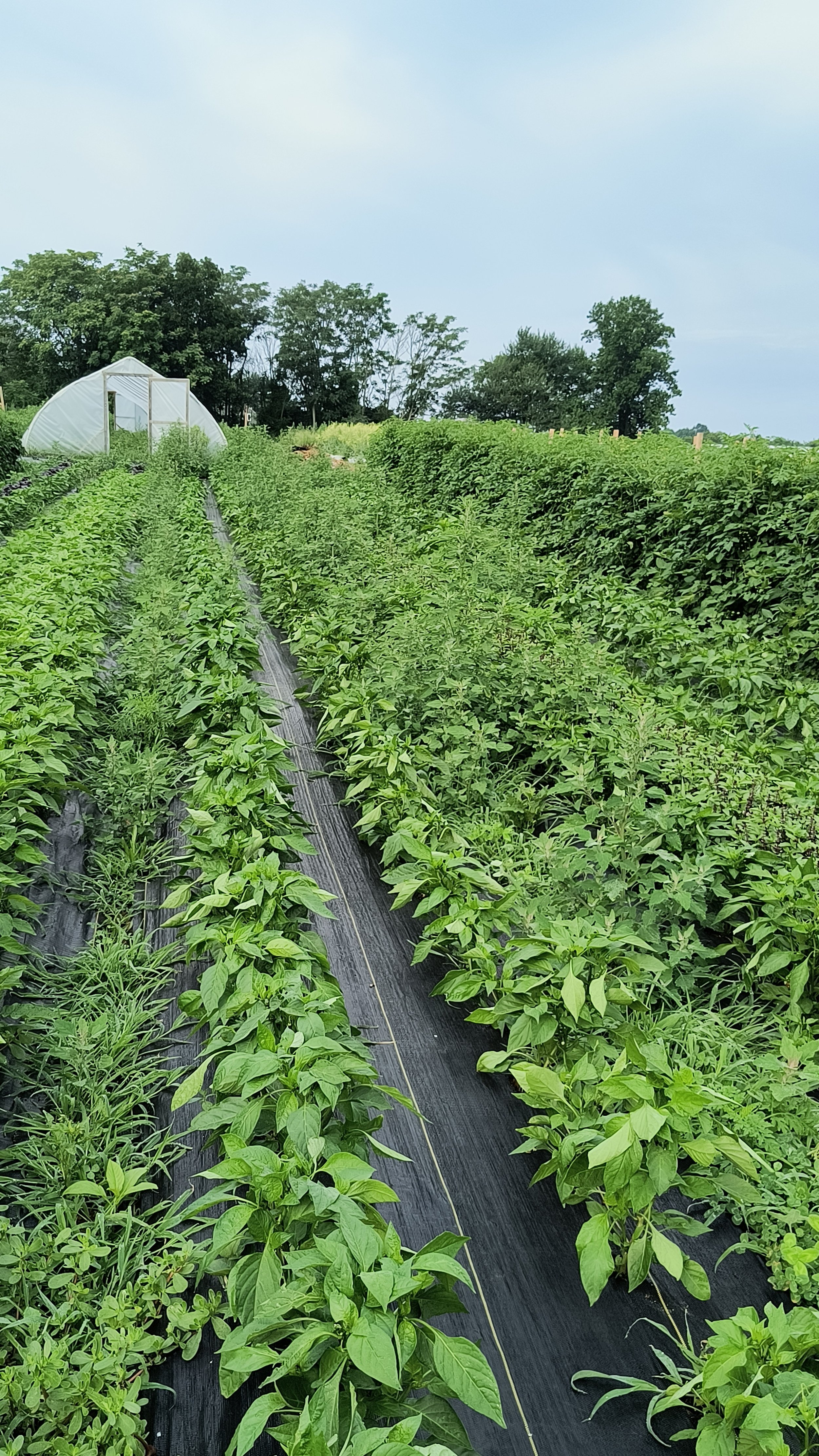
Inter-planting our basil and peppers might be a dying trend. Not a bad idea for gardeners but makes for clumsy harvest and maintenance.

Winter squash planted July 19

We had 600 feet of cherry tomatoes and 1000 feet of slicing tomatoes.

And some fell over as usual. I think I’m going to switch to metal conduit that is 8 feet long so I can get them deeper, have them taller, and hopefully both of those things will help. Next step is some kind of tension wire which I’m really not interested in doing for 1600 feet of tomatoes.

Shoot, plant fall stuff.

This every other day for 2 months straight.

Well I got some fall stuff in. This was August 26, we’re eating these now as broccolini, broccoli, and cabbage.

See what I mean? These summer weeds are no joke.


Some of you are getting inflammation just from looking at all these nightshades.

Trying to grow you all enough lettuce and less weeds. For the record, sitting on the bucket wasn’t great.

If we actually had beans all season I don’t know what else would get done. But they are one of our favorite crops for sure.

Pretty happy with the bayou bella sweet potatoes.


No greens harvester here/ Hand cut lettuce so I can meticulously scower for non lettuce intruders.
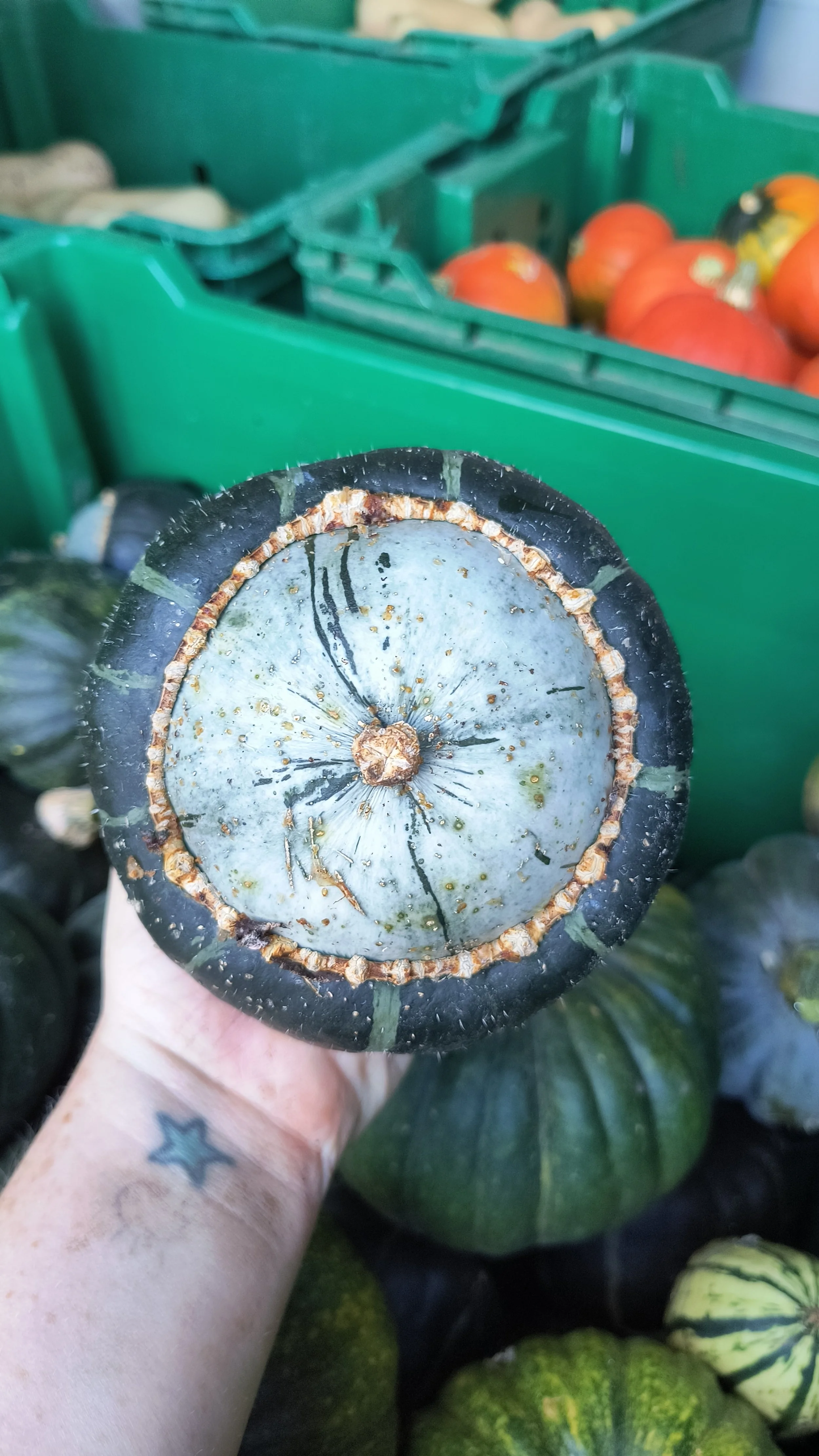
Buttercup squash, I mean that’s cool right?


So yah… didn’t trellis tomatoes in here and they got wild and it got weedy.

But look how clean I got it! See I used the broadfork instead of the tiller and it was pretty nice.

And here it is now almost ready for harvest. This one sown beginning of October is coming to markets through November, and the second tunnel sown October 11 will be for December harvest. We are waiting for baby carrots, beets, turnips, and more daikon radish to hopefully complement the greens from the tunnels.

Still some lettuce and spinach outside for this first week of November. Top of plot was winter squash.

It ain’t always pretty. But it’s good honest work. Thanks for hanging out.
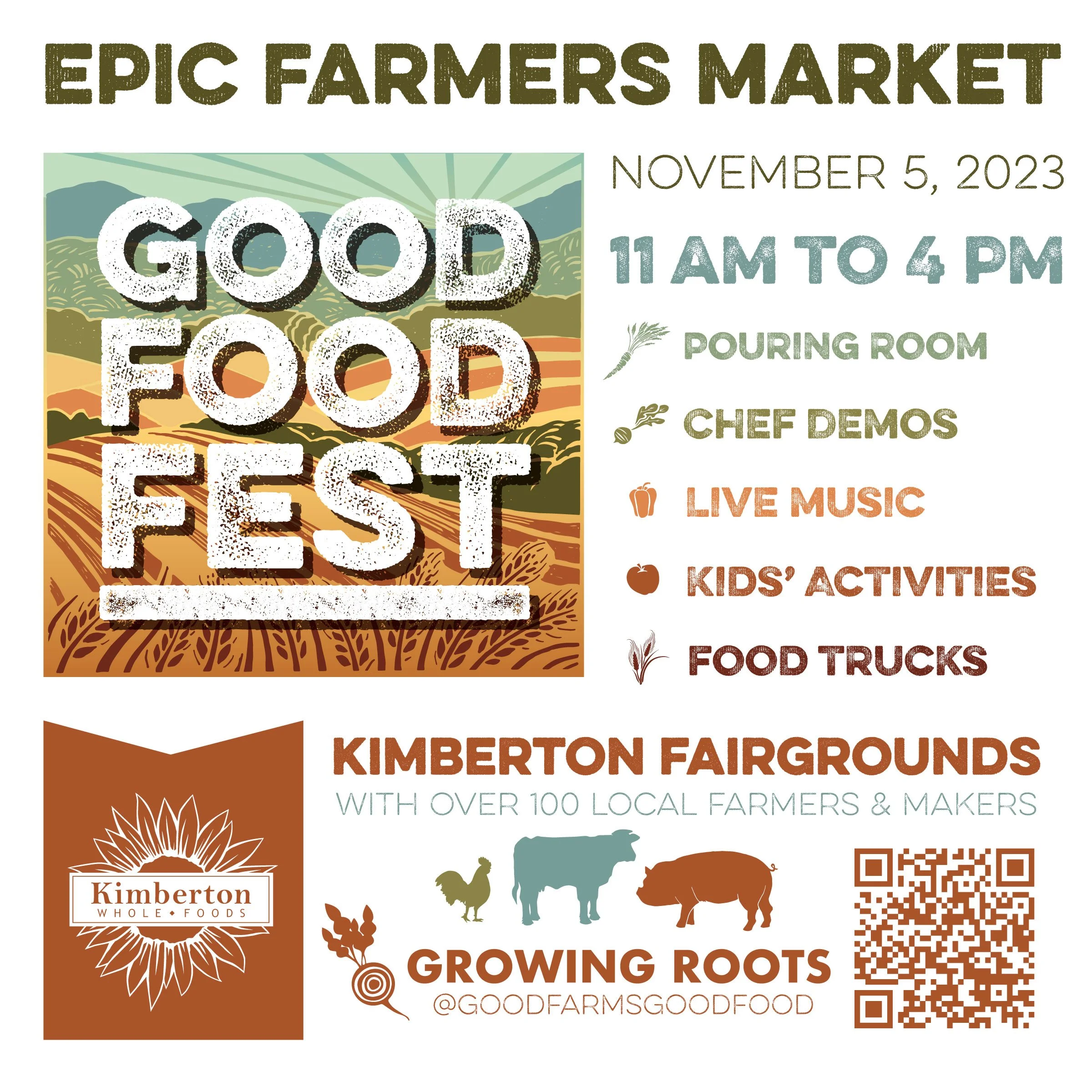

Come see us at the Good Food Fest this Sunday, November 5th from 11am-4pm. We’ll be there hanging out with hundreds of other local vendors and farmers talking about how we grow, why we grow, where to find us, and maybe selling a few goodies. We hope to see you there, it is always a blast and a great way to meet your local food producers.
If you are here because you met us at Good Food Fest, thanks for coming and thanks for checking us out. Read some of my older blogs about what keeps us wanting to grow food, and why you should eat local and know your farmers.