Big Conventional AG vs. Small Local Food

I know all of you have seen these stories because many of you have been looking for our lettuce even more than usual. I thought now would be a good time to discuss what accepted agricultural practices may lead to such contamination. So I’ll start by showing you what the big, corporate, conventional, monoculture farms are up to.

Irrigation can sometimes cause contamination. On large scale farms a relatively common practice is flood irrigation. Flood irrigation is deemed safer than overhead irrigation, but the problem isn’t the technique of applying the water, but the water itself. So what is in the water sometimes?
The bigger the farm, the higher the overhead. Fertility can be a big cost for broad scale agriculture. One of the cheapest forms of fertility is treated municipal waste. So if the farm is using unclean water, or mishandled industrial waste products, contamination risk is elevated.


If you can imagine, we grow on less than 2 acres while the average farm size is over 450 acres. It takes larges teams of people to harvest such vast fields. Large teams of people on huge amounts of space with a trailer full of port-o-potties and a handwashing station… somewhere…
So harvesting can be another potential opportunity for contamination, especially when there are more cooks in the kitchen. Our produce is handled by 2 or less people and goes from field to bin to market table.


The last chance of contamination (on the farmers end) is the post harvest handling. The easiest way to move large quantities of produce is a flume conveyor. Water is recycled through the machine as the vegetables or transported from one end to another. The larger the operation, the larger the batches of produce moving through the system. Larger batches of water means larger batches of vegetables contaminated at a single time. Larger systems means more equipment to try to keep clean and sanitized, more people to try to train on food safety and good hygiene practices.
Due to all of these variables, and the sheer amounts of food going through these big agriculture processes, regulatory oversight is a must. Not only is oversight a must, but sanitizing agents are also needed to cut down on the potential risks for contamination. So most often when you are buying big ag vegetables know they have been washed in some kind of sanitizing agent, especially if it says “washed”. “Washed” is language that implies a cleaning or sanitizing agent has been used. We have to use the word “rinsed” to keep our language accurate to our process which is simply running clean well water over certain crops after harvest, or dunking them in clean well water with no other products in the water.
Full Circle CSA Lettuce Mix Harvest Proccess
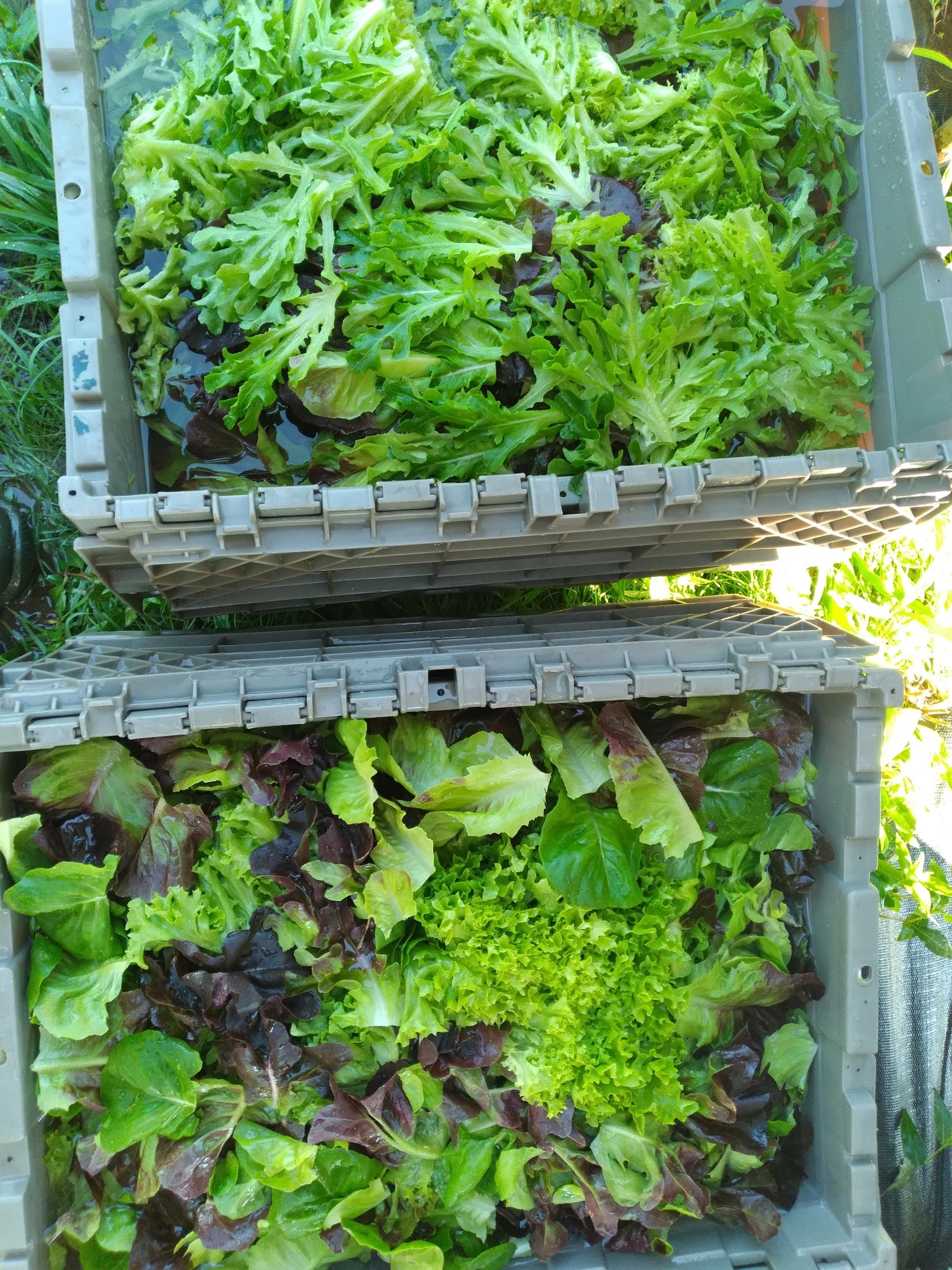
By myself, I take my freshly washed harvest bins to the field where I cut handfuls of lettuce and drop it into the bin. The bins come back with me to our shady wash station where I fill them with clean well water straight from the hydrant with a “potable water” hose.
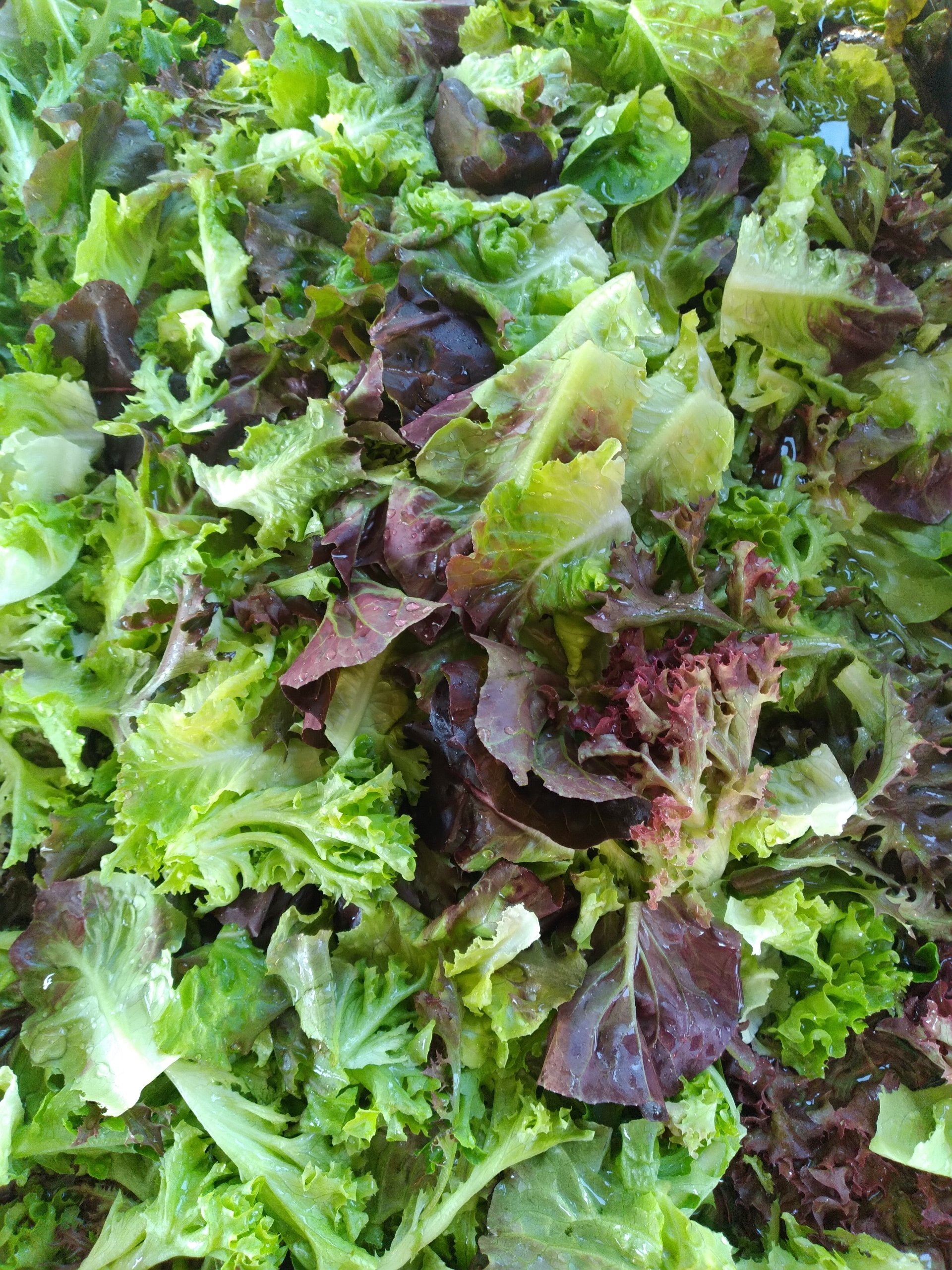
From my clean harvest bins I mix the lettuce into a larger freshly washed bin to combine any unique varieties, give more room for any debris to be rinsed off, and generally have an extra opportunity for quality control. So all of our greens get this double rinse treatment.
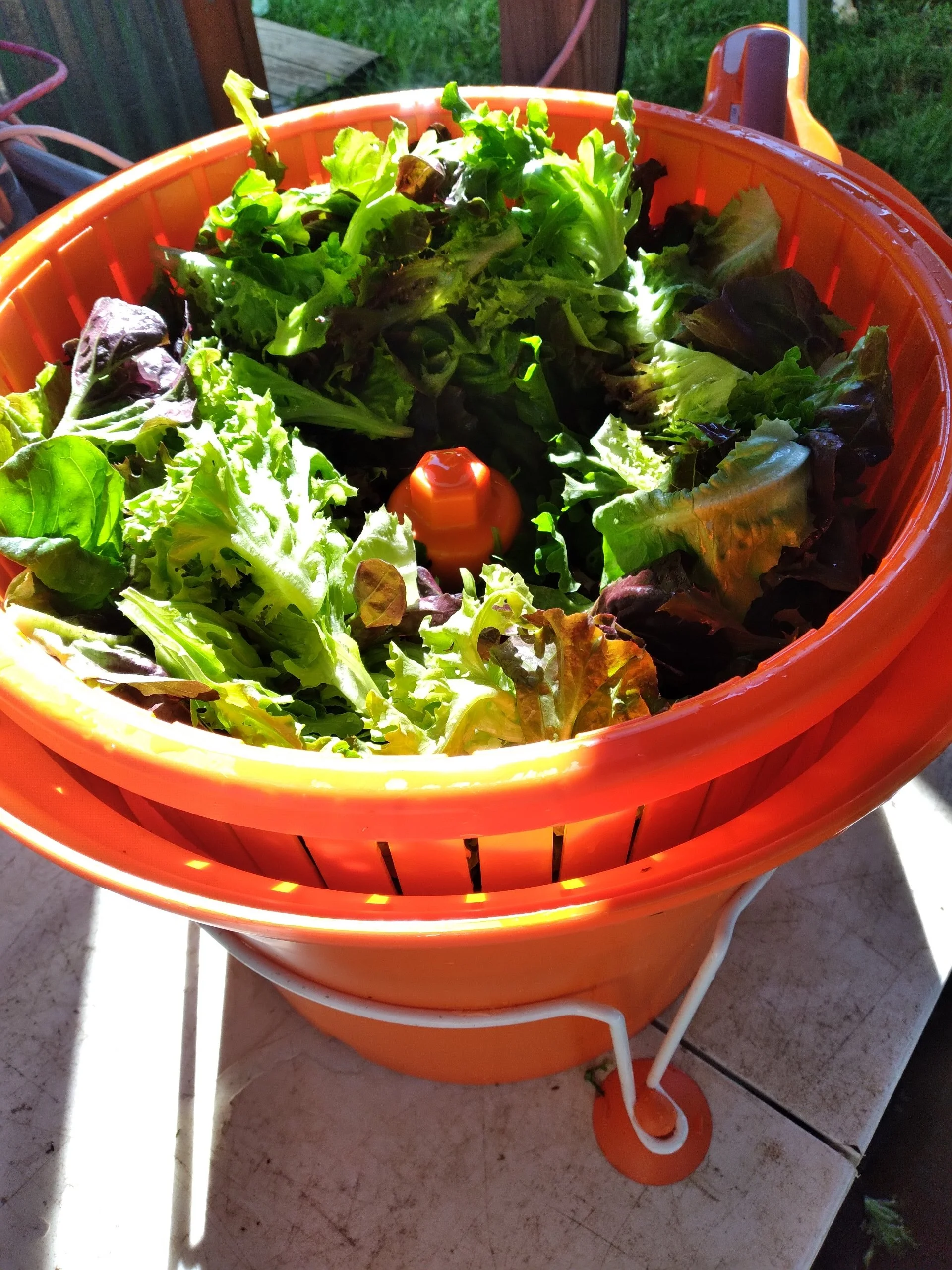
After being double rinsed, all of our bag greens are spun dry with our freshly washed salad spinner.
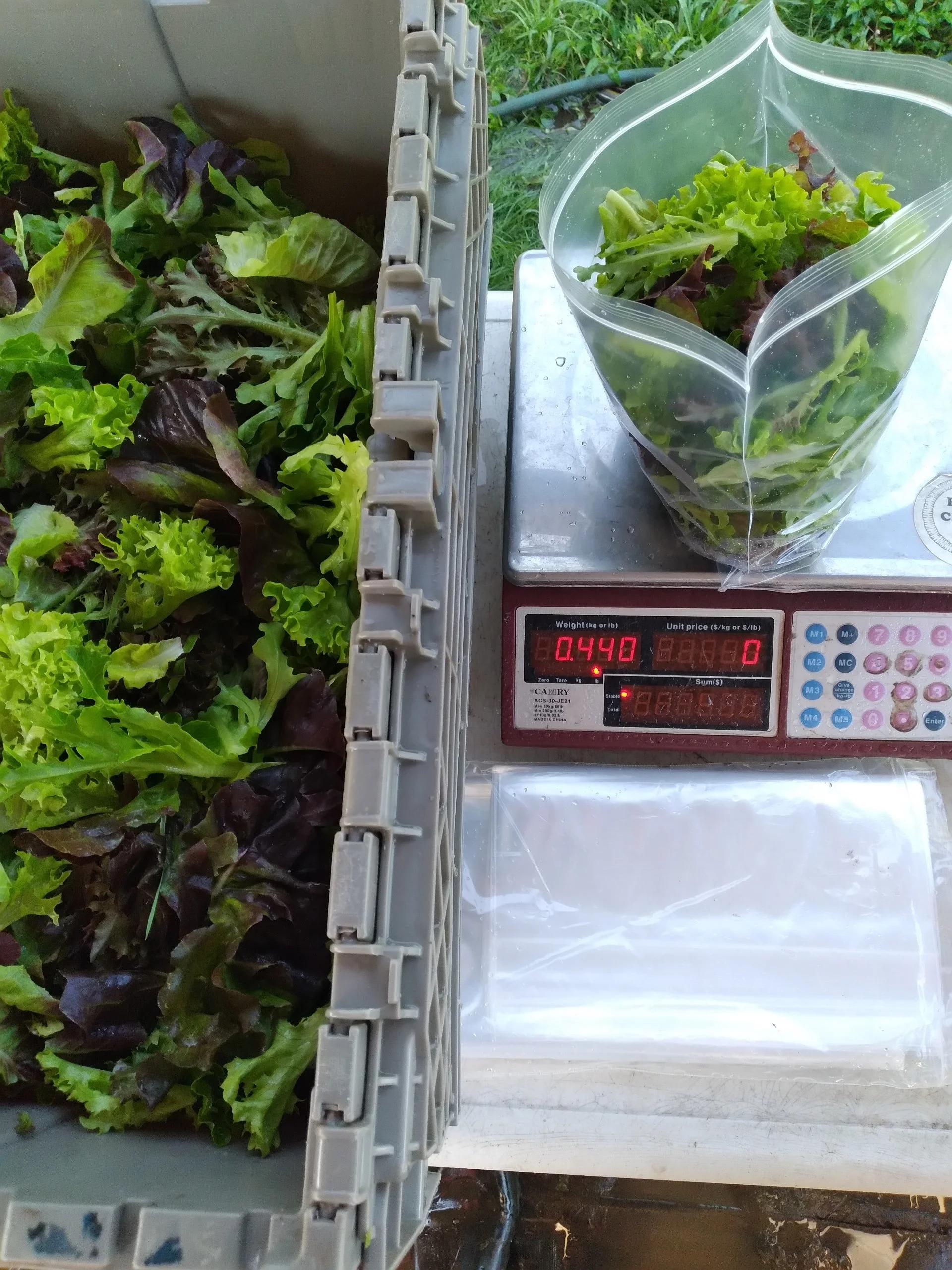
The mix is then bagged into virgin plastic produce bags and put into our walk in cooler and kept at fridge temps for the few hours or possibly 24 hours before market. Our produce is harvested fresh for market, we only bring storage crops to market more than once, anything else will only see the market table one time at its peak freshness.
How We Grow It
Baby leaf lettuce takes 21 days to mature in optimal conditions after a 3-10 day germination window. We also grow a head type lettuce that falls apart into lettuce mix, which takes 60-75 days from sowing the seed. Summer is the hardest time to grow lettuce, so when the news of contamination broke the opportunity for us to shift for the new market demand was not just over night. Beds need prepped, seeds need sowed, plants need planted, beds need weeded, environmental factors need to be right.
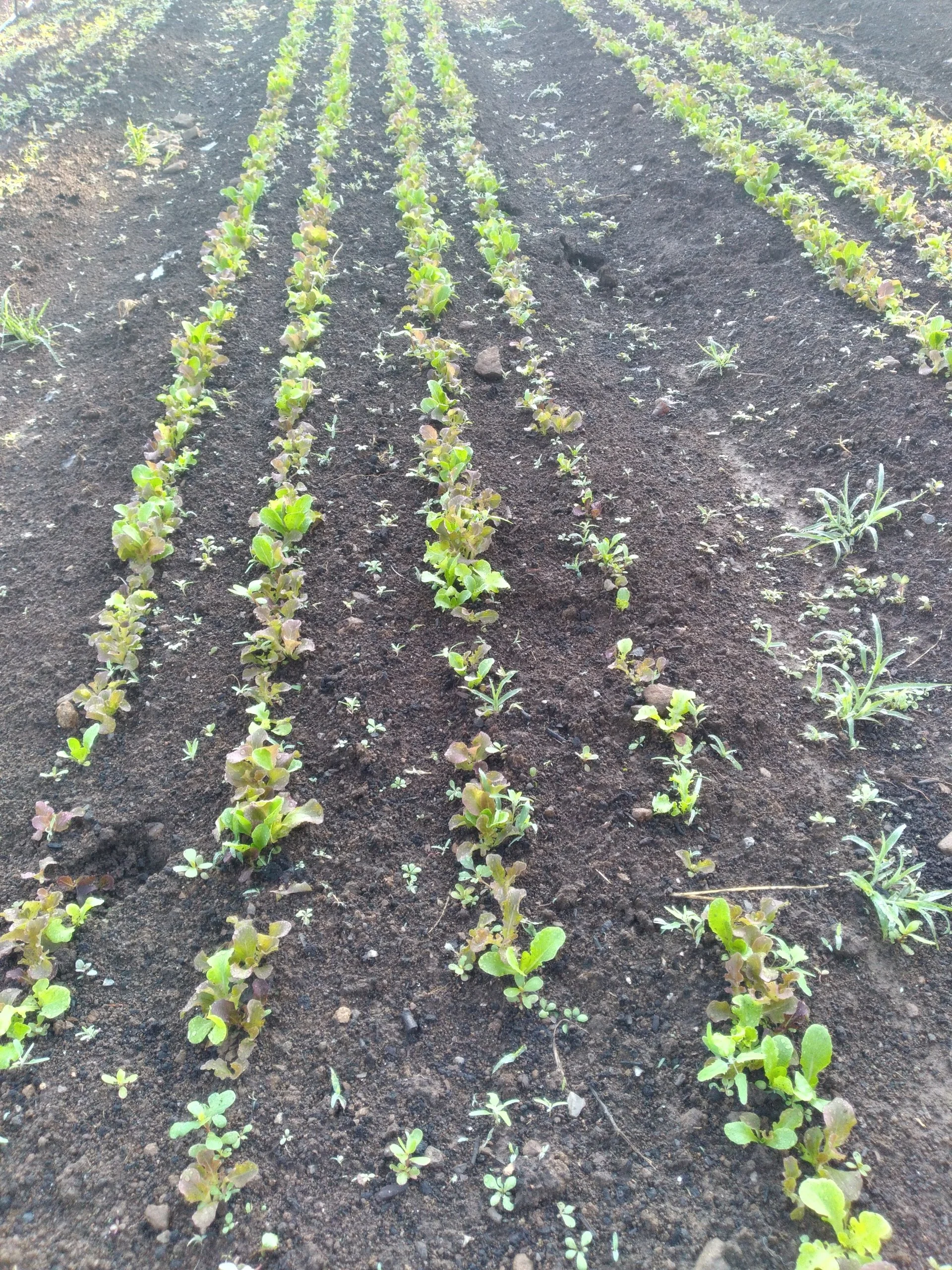
This was a succession of baby leaf lettuce a week or so ago. Even cultivating multiple times a week, with all of the rain the weeds just re-root and continue to be competition. So even with success, there is much maintenance to do to make for an efficient harvest and clean final product.
One reason we’ve been low on lettuce, the contraption I use to directly sow these tiny seeds had a broken part I had to track down and special order, so after a couple of failed successions I finally have my machine up and running and getting seeds into the ground for future mix.
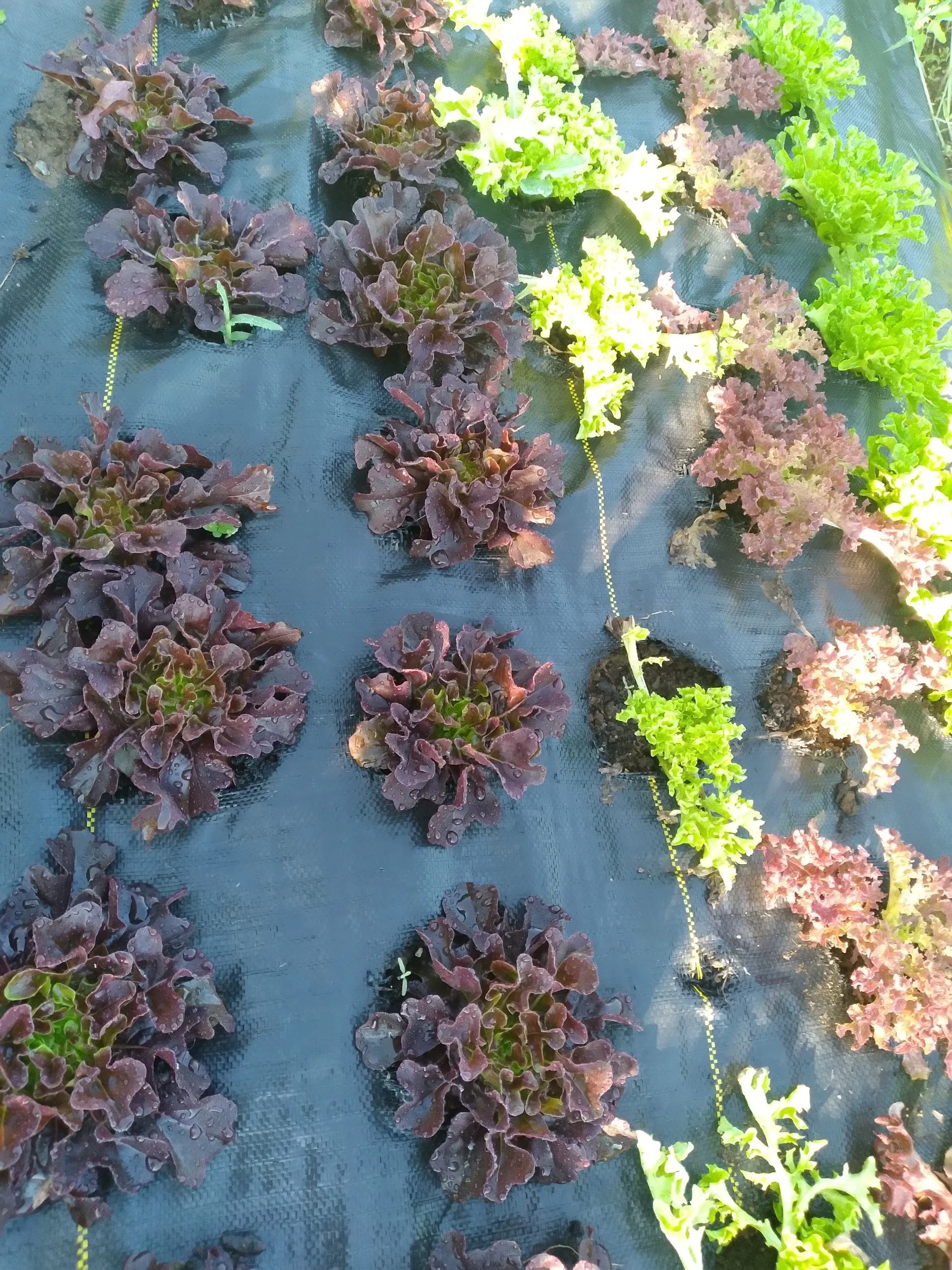
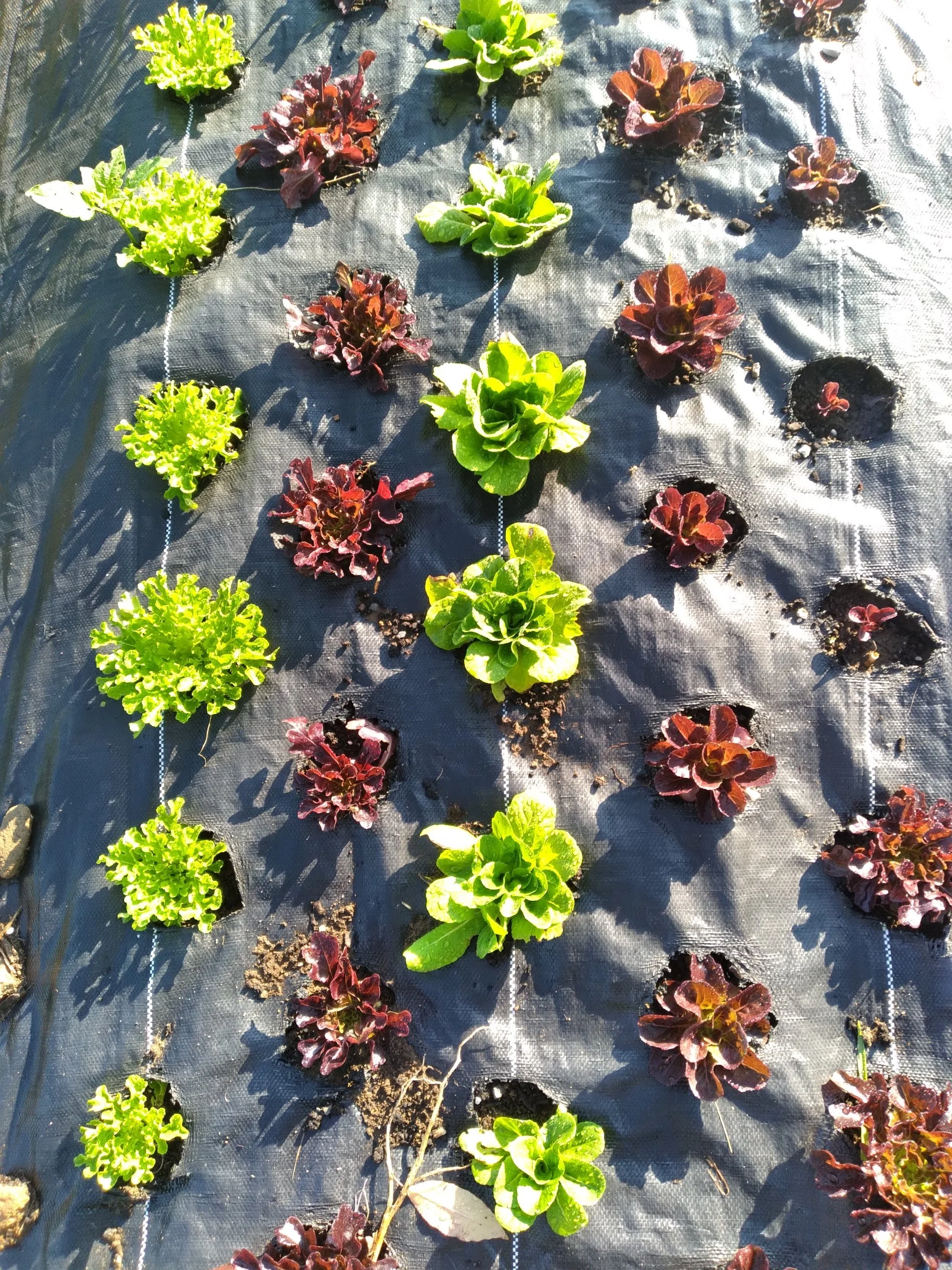
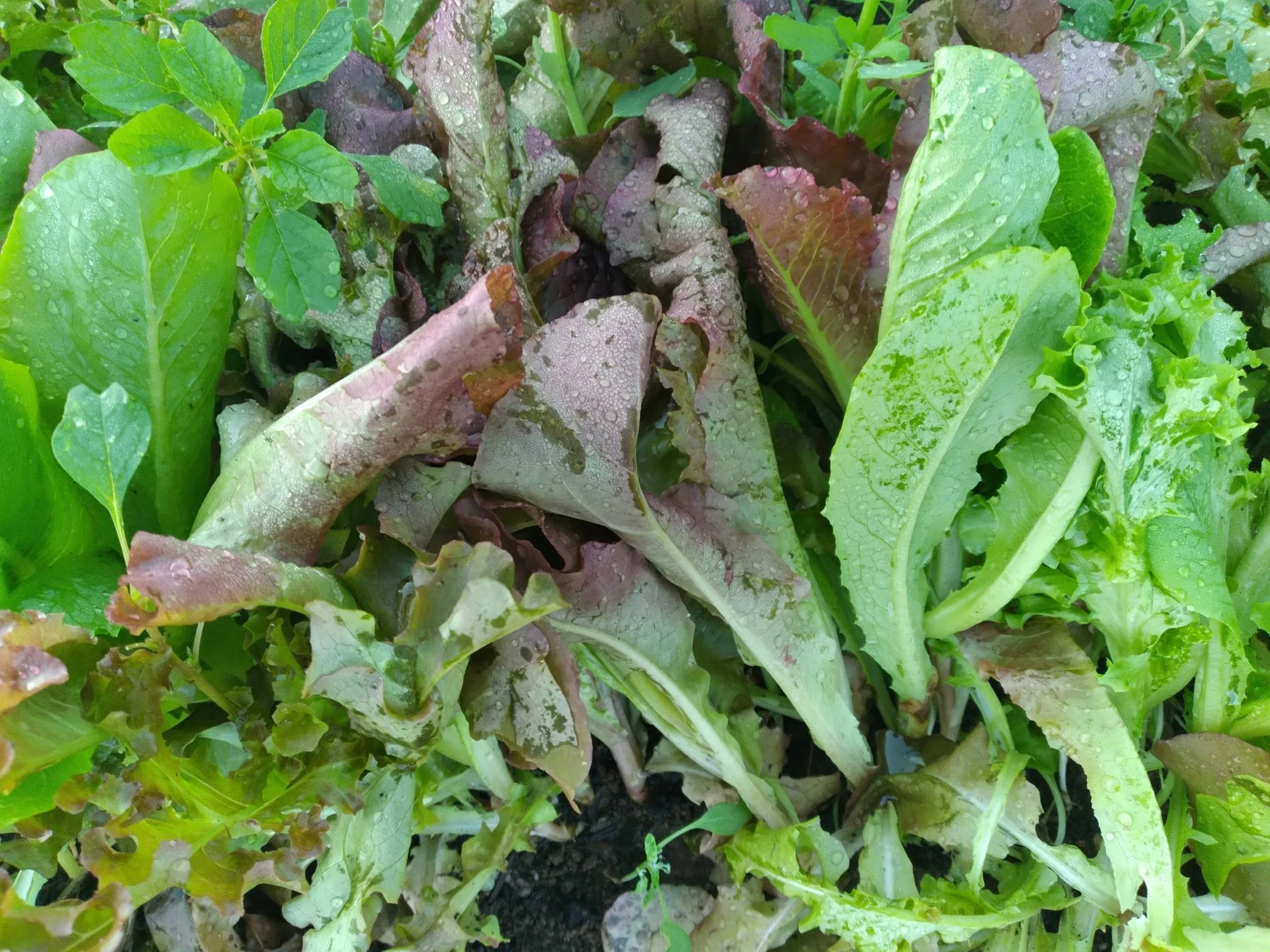
After just a couple of weeks since this photo, these above photos (leaf mix and head mix) will be coming to market with us this week. Our leaf mix and very tender and delicate, while these head mixes tend to be a little more dense and some varieties crunchy, our favorite mixes are when we have them all combined, but seasonal challenges mean every mix we bag is unique to itself and the varieties we chose for seasonal success.
The Challenges
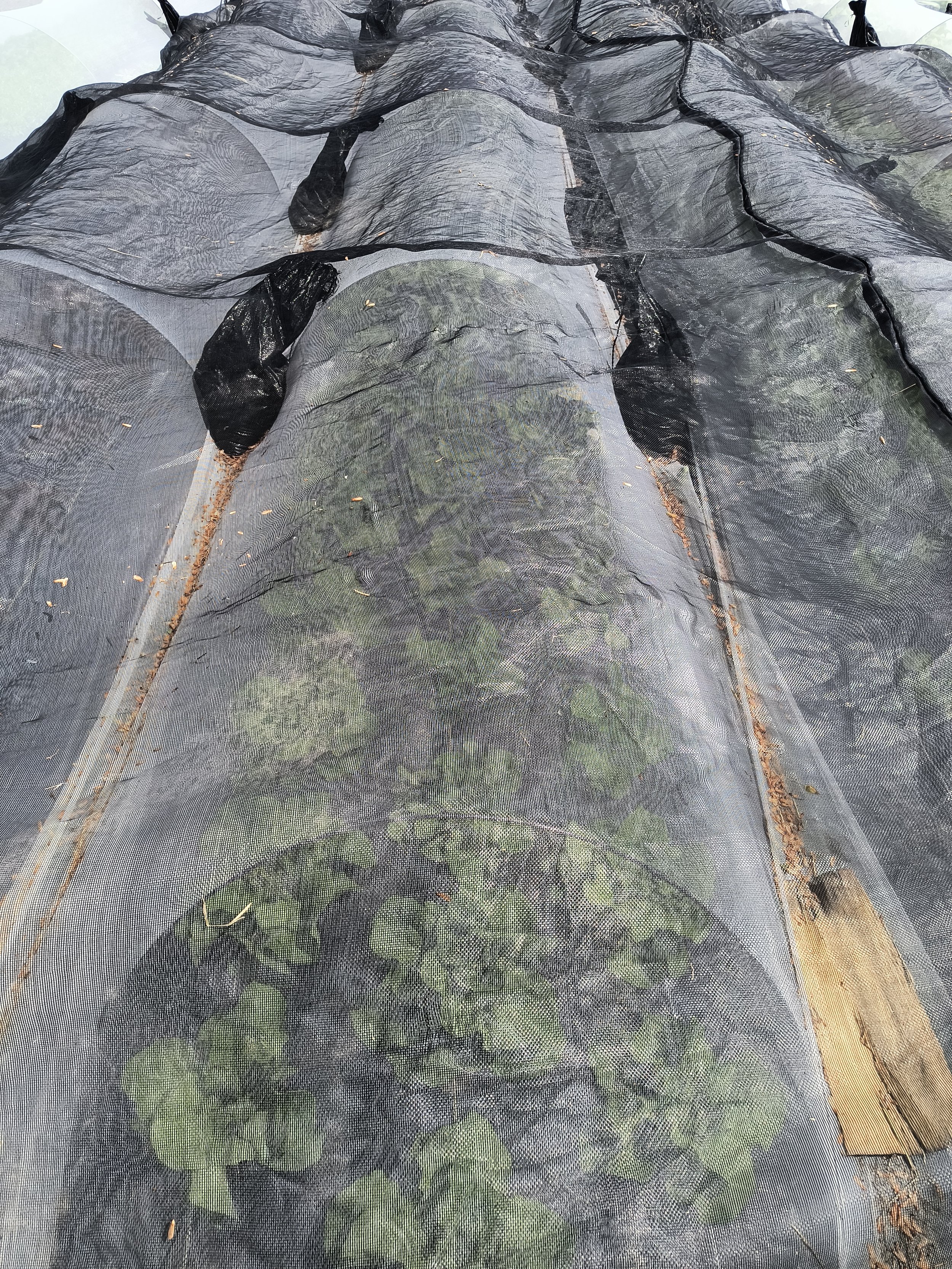
Lettuce is a cool weather crop. In the summer time we use shade cloth to keep the lettuce happy, because when it bolts to flower it gets bitter and unpleasent.
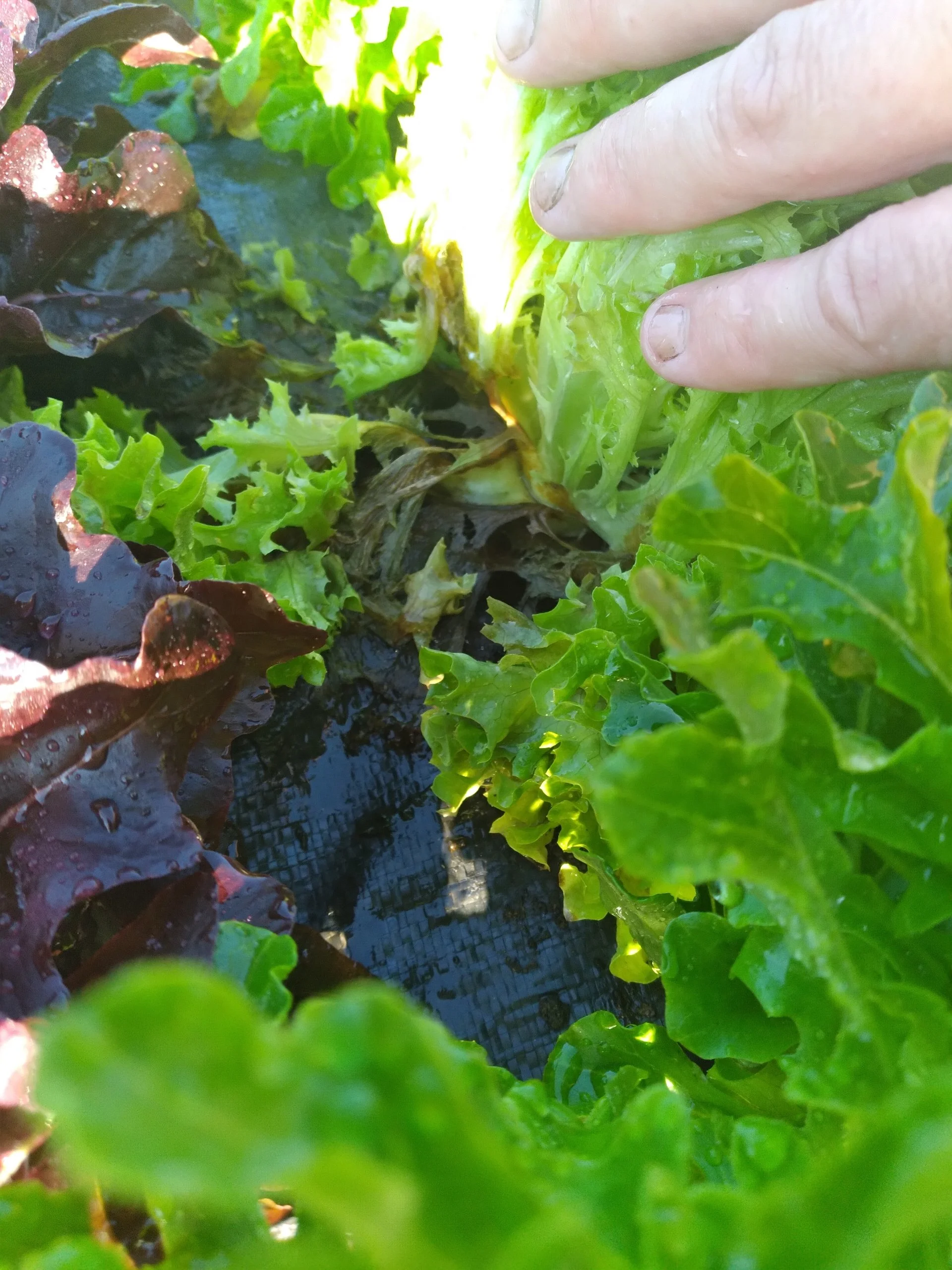
However, when the weather is super rainy and humid shade cloth is a bad idea. Humid conditions can literally melt lettuce. Lettuce is mostly water, so when it gets too wet disease can take over or even literally burst the cell walls of the plant.
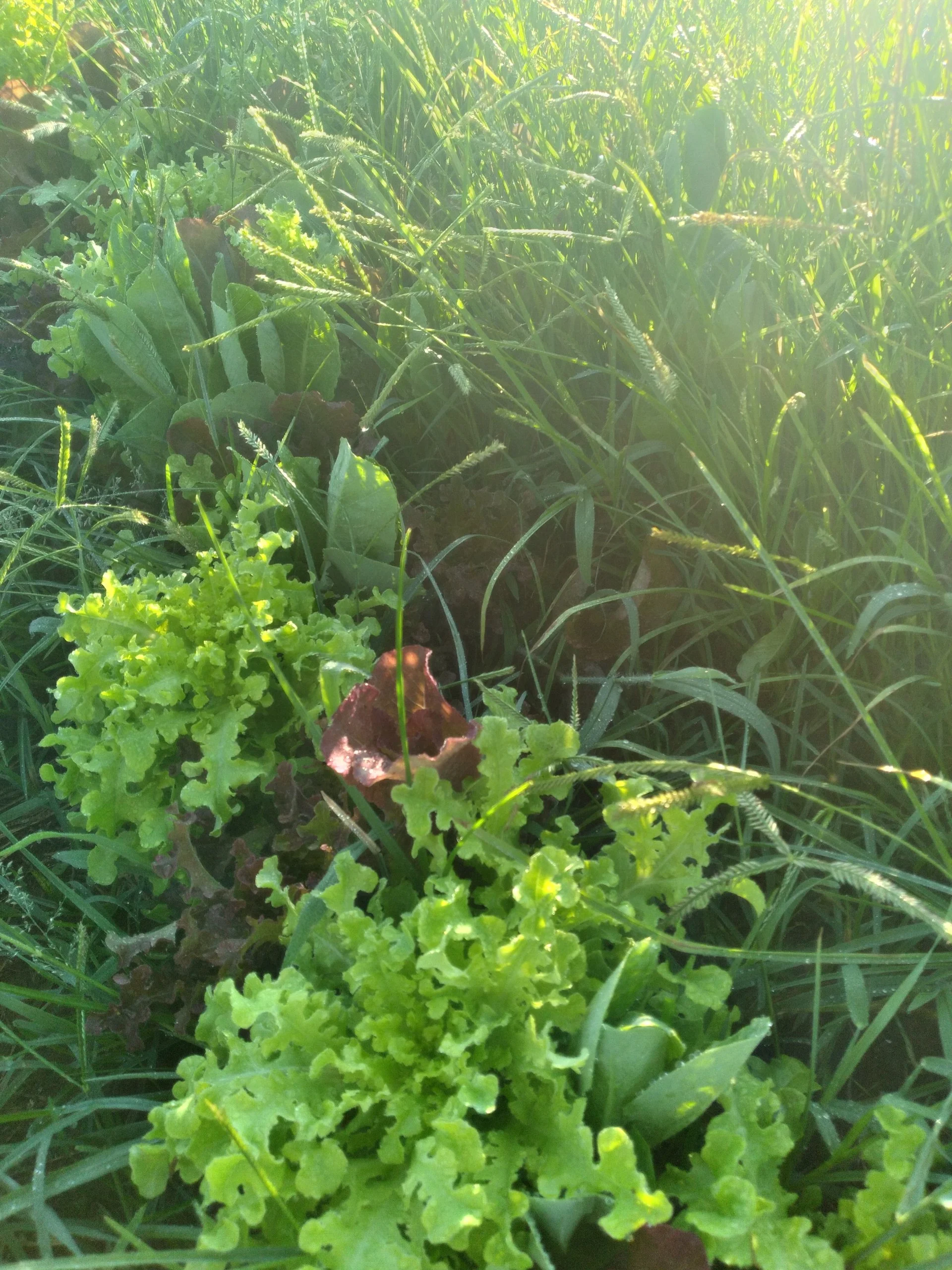
Weeds! You can cultivate all you want, but if you can’t find time to hand weed those weeds right along the seed sowing line will begin to out compete your crop. This example is some lettuce already spent from harvest and bolting but you can see how bad weeds can take over.
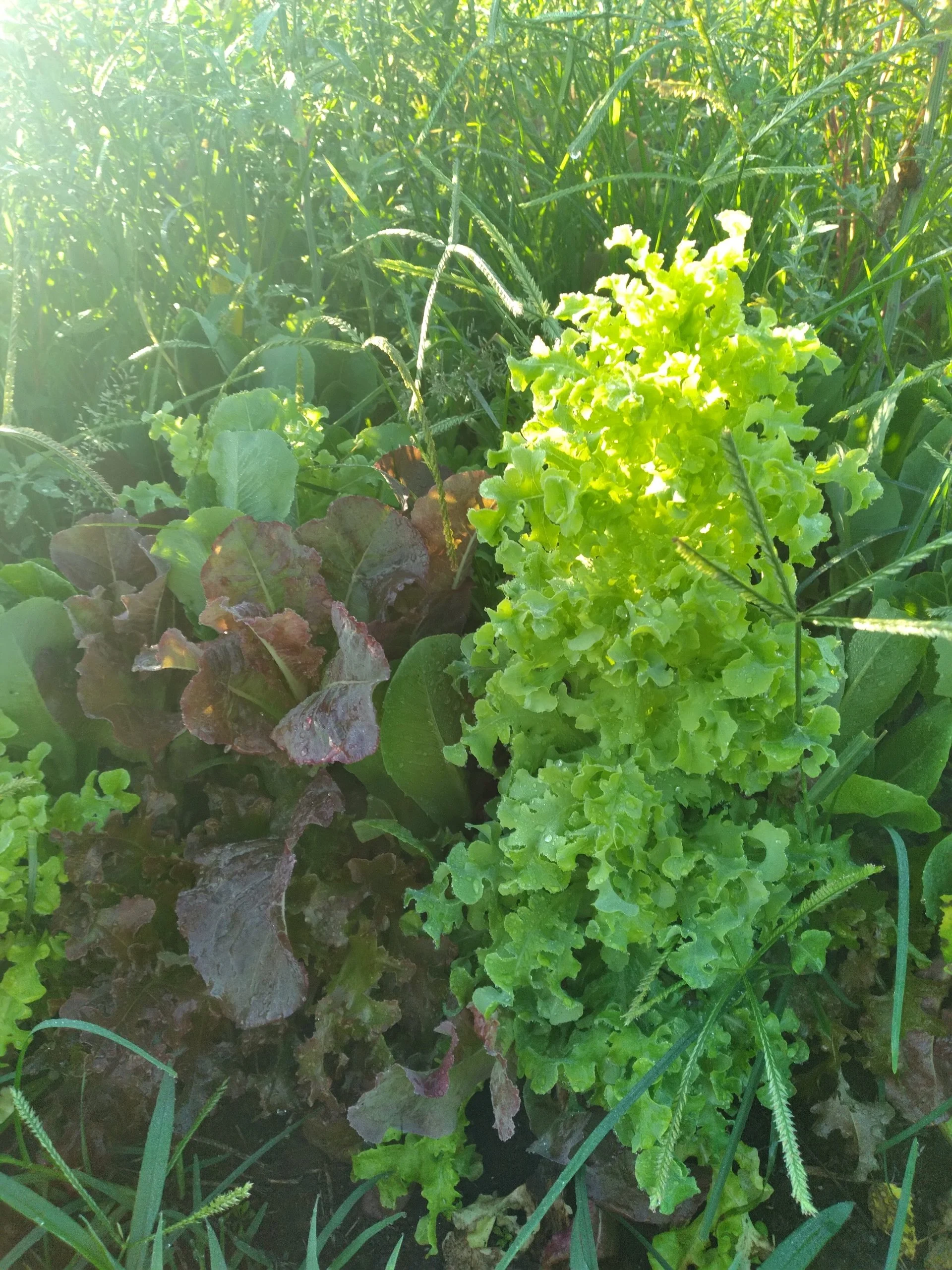
Yes, the weeds are a problem, but when a crop is in such demand I will pick through the weeds. However, this lettuce has bolted and we do not want you all having the misfortune of receiving bitter lettuce mix so it got mowed down to return to the soil.
EDIT: 8/30/2026. After Thursday market (8/20) there was a nasty storm that came through the area. Torrential rain and pounding wind for a short period. First arriving at the farm I didn’t see any issues and thought all was well. However, after washing bins and getting to the lettuce beds I realized some things weren’t all that well at all. The lettuce that saw it’s first cut for Thursday market, looking flawless, was totally flattened and many of the leaves were shredded. I was greatly looking forward to doubling the volume of our mix with this tender leaf lettuce but the storm made harvest impossible.
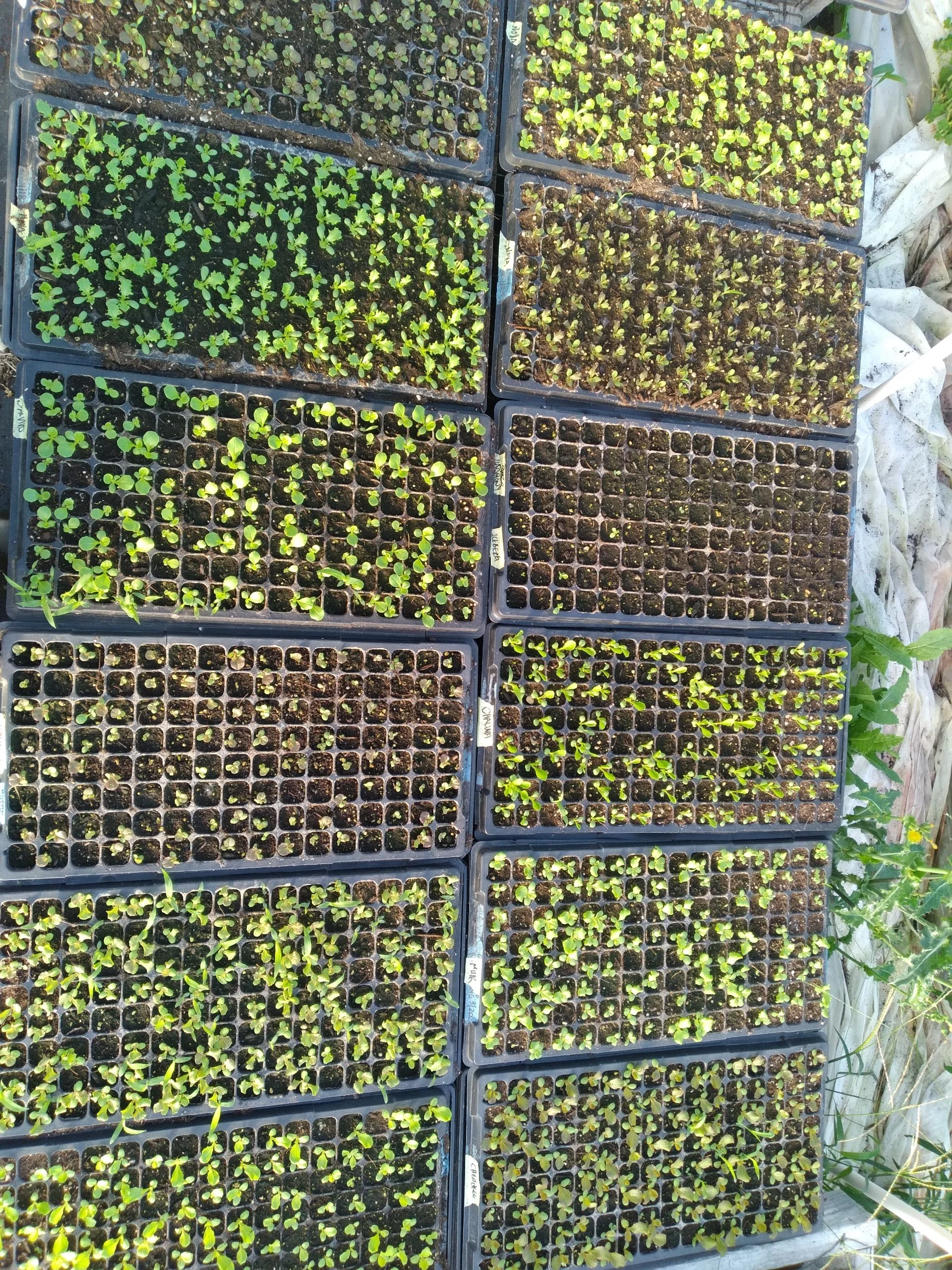
So, when the demand and challenges grow, just sow sow sow!